
Orient Pear
$49.95
Orient Pear (Pyrus communis x Pyrus pyrifolia) is a fire-blight-resistant European × Asian pear hybrid introduced in 1945, yielding large, golden-yellow fruit with firm, juicy flesh and mild sweet flavor ideal for fresh eating and canning. It grows in USDA hardiness zones 5-9 and AHS heat zones 4-9, needs 400-600 chill hours, and benefits significantly from cross-pollination with compatible varieties to maximize yields.
4-5′ Bare Root Grafted Tree
Rootstock: Pyrus Betulifolia – Standard
Can’t be shipped to: AK, HI, MT, OR
In stock
Orient was developed by Walter Van Fleet, a plant breeder working in California, from a cross between European pear (Pyrus communis) and Asian pear (Pyrus pyrifolia or a closely related Pyrus serotina type) prior to 1925. Following Van Fleet’s work, the variety was jointly introduced in 1945 by the USDA Agricultural Research Service and the Tennessee Agricultural Experiment Station, positioning it as a public-domain release directed at the humid-summer orchards of the southeastern United States where pure European varieties struggled with fire blight. This origin places Orient within the USDA’s long-running effort — begun in the early 1900s under Merton B. Waite — to build Pyrus communis quality onto an interspecific fire-blight-resistant backbone. The Asian parent contributes notable heat tolerance, some grittiness of flesh, and the robustness in humid conditions that made Orient the go-to recommendation for southern orchardists through the mid-20th century. Its characteristic large fruit, sometimes exceeding one pound, and its reliable annual bearing habit added to grower appeal. Orient was among the first widely available fire-blight-tolerant pears in the South and remained a standard recommendation for the region for decades.
Orient roots best in slightly acidic, well-drained soil in the pH range of 5.9 to 6.5. Staying within that window matters: soil below pH 5.5 can lock out calcium and magnesium, weakening cell walls and increasing susceptibility to the diseases Orient already faces. Good drainage is non-optional—standing water during the dormant season stresses the root system and predisposes trees to Phytophthora collar rot. Moderate irrigation keeps fruit sizing on track through summer without encouraging the kind of succulent vegetative growth that fire blight thrives in; deep, infrequent watering after establishment is preferable to frequent light applications. Orient's low drought tolerance means that established trees still need supplemental water during dry stretches, especially during fruit development in July and August. The roughly 350 chill hours required make this pear a practical fit across zones 5–9, covering most of the mid-South, mid-Atlantic, and lower Midwest—regions with humid summers where fire blight pressure is high and where Orient's resistance rating gives it a real management edge.
USDA Hardiness Zone: 5-9
AHS Heat Zone: 4-9
Chill Hours: 300-400
Sun Requirements: Full Sun
Soil pH: 5.9-6.5
Soil Drainage: Well-drained
Water Requirements: Medium
Drought Tolerance: Low
Heat Tolerance: High
Plant Spacing: 20-25 ft apart
How to Prune: Train to central leader or modified central leader. Head newly planted trees at about 24 inches. Select 3-4 scaffold branches in first summer and spread with spacers to encourage wide crotch angles. Minimal pruning until bearing; then prune to remove dead, diseased, or crossing wood and maintain open canopy. Avoid heavy pruning which stimulates succulent growth susceptible to fire blight.
Orient forms a fairly symmetrical, upright-to-spreading crown that reaches 15 to 20 feet in both height and spread at maturity, putting it at the larger end of manageable backyard fruit trees. Fast growth in the early years means you can expect a bearing-age tree within a reasonable time frame, but that same vigor requires thoughtful training: the central leader or modified central leader system suits Orient well, with scaffold branches selected in the first summer and spread with wooden spacers to develop wide crotch angles. Narrow crotch angles are structurally weak and snap under heavy fruit loads. Once established, Orient needs only light maintenance pruning—removing dead, diseased, or crossing wood and opening the canopy enough for light and air penetration. Heavy annual pruning should be avoided because it stimulates the succulent, nitrogen-rich shoot growth that fire blight bacteria colonize most aggressively. The tree's deciduous habit, white spring bloom, and attractive spreading canopy make it a productive specimen in food forest canopy plantings or orchard rows.
Mature Height: 15-20 ft tall
Mature Spread: 15-20 ft wide
Growth Habit: Upright to spreading
Growth Rate: Fast
Foliage Type: Deciduous
Food Forest Layer: Canopy
Attracts Wildlife: Bees; Birds; Butterflies
Life Span: Perennial (50+ years)
Orient flowers early in the season—mid-March to early April in a temperate climate—which generally allows good overlap with other mid-season European and hybrid pears. The variety is partially self-fertile and will set some fruit without a partner, but cross-pollination consistently increases both yield and fruit size. Suitable companions include Kieffer, Moonglow, Baldwin, and Spalding, all of which bloom on a compatible mid-spring schedule and produce viable pollen. Orient cannot pollinate itself reliably enough for a full crop; plan on planting at least one compatible variety within 50 feet, or within bee foraging distance in a mixed orchard. Pollination is carried out by honeybees and native bees; early bloom timing means cold snaps can reduce pollinator activity, so avoid low frost pockets as a planting site when possible.
Bloom Season: Early
Bloom Window: Mid Mar - Early Apr
Pollination Requirements: Partially Self-Fertile; cross-pollination recommended for best yields
Pollination Mechanism: Insect (Bees)
Flower Color: White
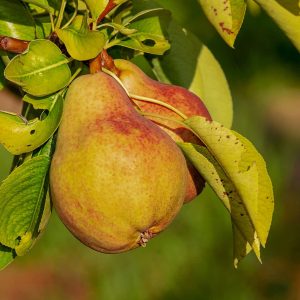
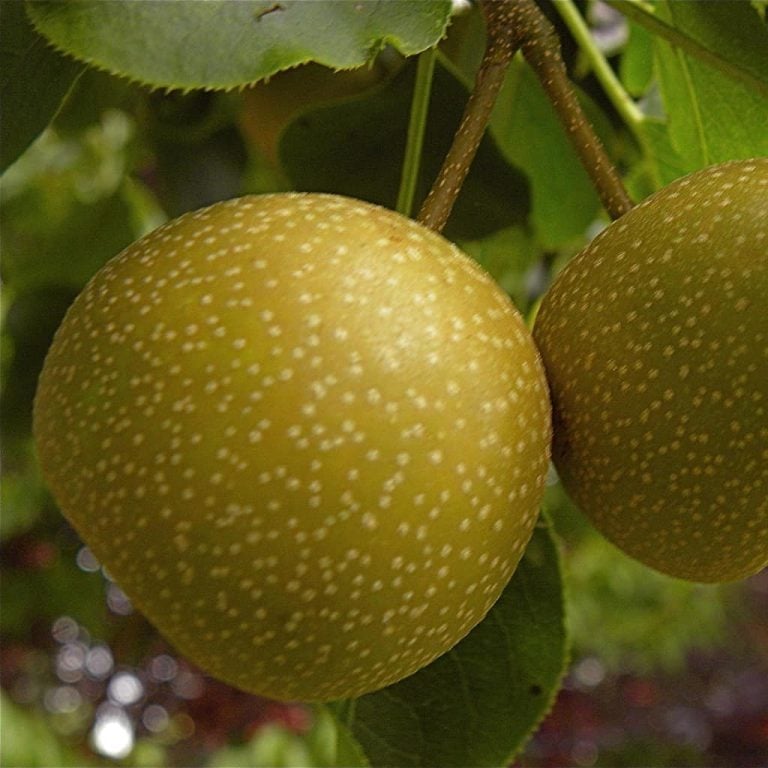
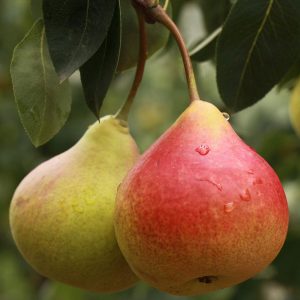
Orient produces large, somewhat rounded fruit—often approaching one pound per pear—with golden yellow skin that develops a light red blush on the sun-exposed side. The flesh is firm and juicy with a mild, lightly sweet flavor profile that lacks the complex aromatic quality of Bartlett but compensates with size and texture consistency. Harvest runs from late July through early September in a temperate climate, earlier than many fall-ripening European pears. The firm texture holds up well in the canning process, making Orient one of the better dual-purpose pears for both fresh eating and preservation—it does not go mealy in the jar the way softer varieties sometimes do. Refrigerated storage extends shelf life to two to four weeks. The fruit is well-suited for baking, canning, and preserves; it is also acceptable for fresh eating, though consumers accustomed to Bartlett-style sweetness will find the flavor comparatively subdued. The annual bearing habit makes crop planning straightforward.
Ripening Season: Early
Harvest Window: Late Jul - Early Sep
Fruit Weight: 1 lb
Flavor: Mild, sweet, lightly juicy; good for canning and fresh eating
Fruit Color: Golden yellow with light red blush
Fruit Texture: Firm, juicy
Bearing Habit: Annual bearer
Years to Bear: 4-6 years
Storage Life: 2-4 weeks refrigerated; excellent for canning
Culinary Uses: Fresh eating; canning; baking; preserves
Orient's resistant rating against fire blight (Erwinia amylovora) is its most commercially significant trait, directly addressing the defining disease challenge for pears in humid climates. Resistant status means that during typical infection windows — warm, wet weather at bloom — Orient sustains noticeably less shoot strike than susceptible varieties. In practice this translates to a reduced spray program: no preventive copper or streptomycin is needed under most conditions, though growers in high-pressure regions should still prune strikes promptly at least 12 inches below visible discoloration, sterilizing tools between cuts with dilute bleach.
Fabraea leaf spot (Fabraea maculata), pear scab (Venturia pirina), sooty blotch and flyspeck (Schizothyrium pomi / Zygophiala jamaicensis complex), stony pit virus (Pear stony pit virus), codling moth (Cydia pomonella), pear psylla (Cacopsylla pyricola), plum curculio (Conotrachelus nenuphar), and oriental fruit moth (Grapholita molesta) all warrant attention. For fungal diseases, maintain airflow through pruning and remove fallen leaves in autumn to reduce overwintering inoculum. Kaolin clay applied before peak flight is an OMRI-listed option for codling moth and plum curculio. Encourage psylla predators — lacewings and parasitic wasps — through diverse understory plantings. Stony pit has no cure; plant only certified virus-free stock and remove infected trees.
Fire Blight: Resistant
Fabraea Leaf Spot: Moderately Susceptible
Pear Scab: Moderately Susceptible
Sooty Blotch and Flyspeck: Moderately Susceptible
Stony Pit Virus: Moderately Susceptible
Codling Moth: Moderately Susceptible
Pear Psylla: Moderately Susceptible
Plum Curculio: Moderately Susceptible
Oriental Fruit Moth: Moderately Susceptible
- Train wide early: Use wooden branch spreaders in the first growing season to establish crotch angles of 45–60 degrees. Wide-angled branches fruit earlier and resist wind-load breakage better than steeply angled ones.
- Moderate nitrogen: Excess nitrogen drives the succulent shoot growth that fire blight targets. Skip nitrogen-heavy fertilizers if growth exceeds 12–18 inches per year; use a soil test before applying any amendments.
- Harvest by firmness, not color: Orient fruit does not soften dramatically on the tree. Pick when background color shifts from green to yellow and flesh gives slightly to finger pressure. Over-tree ripening leads to gritty texture.
- Kaolin clay for curculio and moth: Begin OMRI-listed kaolin clay applications at petal fall and repeat after rain events through mid-June to reduce codling moth and plum curculio damage without disrupting beneficial insects.
- Pair with a mid-season bloomer: Orient is only partially self-fertile — plant Kieffer, Moonglow, Baldwin, or Spalding within 50 feet to meaningfully increase fruit set on compatible bloom schedules.
We ship in late winter or early spring based on your USDA hardiness zone.
We strive to ship orders on the scheduled dates listed in the table below. However, please note that the actual shipping date may be subject to change due to factors like weather conditions and order volume.
The specific date for shipping your order will be determined according to your zipcode at the time of checkout.
Our plants are shipped bare root, packed in moist sawdust, and securely wrapped in plastic to prevent the roots from drying out. We use USPS Ground Advantage for shipping, ensuring that your plants typically arrive within 2-5 days after packaging.
In case you're unable to plant the trees immediately upon arrival, we recommend soaking them in water for a few hours and temporarily heeling them in. Ideally, they should be planted within three days of receipt for optimal health.
See our full shipping policy and map here
| Zone | Ship Date |
|---|---|
| 11 - 8b | March 1st, 2027 |
| 8a - 7b | March 8th, 2027 |
| 7a | March 15th, 2027 |
| 6b | March 22nd, 2027 |
| 6a | March 29th, 2027 |
| 5b - 5a | April 12th, 2027 |
| 4b - 4a | April 26th, 2027 |
| 3b - 1a | May 3rd, 2027 |
Our 365-Day Plant Guarantee: We ensure that our plants are delivered to you alive and healthy. If your plant does not survive its first year, you're eligible for store credit under these conditions:
- Your location falls within the appropriate USDA hardiness zone for the plant variety (refer to our hardiness zone map).
- You maintain the roots' moisture and plant within three days of delivery, following the instructions in our Planting Guide.
If you're concerned about your plant's health, please consult our guide, How to Tell if Your Tree is Dead or Dormant. Remember, our plants are shipped in a dormant state and may leaf out at different times based on their species. To check for plant vital
2 reviews for Orient Pear
Related products

Ayers Pear
Checking fit
LeConte Pear
Checking fit
Elberta Peach
Checking fitRated 5.00 out of 5
Summercrisp Pear
Checking fitRated 5.00 out of 5


Reza Shabestari (verified owner) –
My order arrived on time and in a good shape. I defiantly will recommend food forest nursery.
Barbara (verified owner) –
My Orient pear tree arrived right on time and about 3 weeks after planting is leafing out nicely. I purchased it to hopefully pollinate my Moonbeam pear tree. Thanks Food Forest Nursery for sending a nice healthy tree.