Robinson Crabapple
$39.95
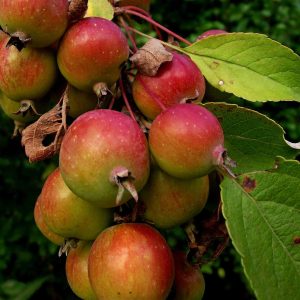
Robinson Crabapple (Malus ‘Robinson’) is a broadly rounded ornamental crabapple originated at C.M. Hobbs Nursery in Indiana, bearing crimson-budded deep-pink blooms in spring and persistent dark-red fruit that clings through winter to sustain songbirds and other wildlife. It grows in USDA hardiness zones 4-8 and AHS heat zones 3-8, and needs about 650-1000 chill hours.
3-4′ Bare Root Grafted Tree
Rootstock: B118 – Semi Dwarf
A Budagovsky selection at roughly 85-90% of standard, so nearly full size. Exceptionally cold hardy and well anchored.
• Support: Freestanding; no staking required.
Can’t be shipped to: AK, HI
In stock
Robinson crabapple originated at C.M. Hobbs Nursery in Plainfield, Indiana, one of the oldest continuously operating nurseries in the United States, tracing its lineage to 1812 when Benjamin Albertson and William Hobbs, Quaker settlers from North Carolina, established the operation. The variety was hybridized there in the 1980s as part of ongoing ornamental selection work that the nursery had conducted across multiple generations of ownership. Full parentage records have not been formally published — a common circumstance for mid-to-late-twentieth-century landscape selections developed at private nurseries where phenotype selection preceded systematic pedigree documentation. Robinson falls within the broad Malus hybrid complex; the bicolor purple-red-to-bronze-green foliage and deep pink single flowers suggest Asian pigmentation genetics similar to other ornamental selections of that era. Its urban adaptability, including tolerance of compacted soils and air pollution, drove rapid adoption in Midwestern and Eastern landscapes following its introduction.
Robinson's broad zone range (4–8) and wide chill-hour window (roughly 400 to 900 hours) reflect genuine climatic adaptability — it performs in cold Northern winters and in moderate Southern winters without the vernalization failures that plague narrower-range cultivars. Full sun is the single non-negotiable site requirement: shading reduces flower density and compromises air circulation, both of which worsen the apple scab pressure this variety carries. Soil pH between 6.0 and 7.0 keeps iron and manganese available for healthy foliage color development; strongly alkaline soils tend to flatten the characteristic purple-red leaf pigmentation. The tree establishes readily in loam, clay loam, and sandy soils provided drainage is adequate — standing water during dormancy promotes Phytophthora collar rot. Once established (typically 2–3 years post-planting), Robinson is moderately drought-tolerant, though consistent moisture during the spring flush and early fruit development improves persistent-fruit quality through winter. Fast juvenile growth (24–36 inches per year) means the tree reaches functional size quickly, but also means annual pruning for structure is more valuable in the first five years than with slower cultivars.
USDA Hardiness Zone: 4-8
AHS Heat Zone: 3-8
Sun Requirements: Full Sun
Soil pH: 6.0-7.0
Soil Type: Loam; adaptable to clay, sand, and other well-drained soils
Soil Drainage: Well-drained
Water Requirements: Average; moderate moisture; drought-tolerant once established
Drought Tolerance: Moderate; drought-tolerant once established
Robinson matures as an upright-spreading tree with a broadly rounded crown, typically reaching 15–25 feet tall and 15–25 feet wide — proportions that suit open lawn specimen planting, street tree use, or orchard-edge pollinator roles. The moderately spreading fibrous root system anchors well without posing infrastructure risk, making sidewalk and median plantings viable where root barriers are used. The three-season foliage display is a genuine design asset: purple-red spring emergence provides a color contrast to the pink bloom, the bronze-green summer canopy is dense enough for moderate shade, and orange-to-red fall color extends ornamental interest well past flowering. Dark red fruit persisting into winter gives the bare canopy a structural ornamental quality and provides critical wildlife food during lean months. Fast growth habit means the scaffold branches need directional pruning in early years to prevent narrow crotch angles that can split under ice or heavy fruit load. Robinson is thornless, which is a meaningful advantage for high-traffic planting sites and for growers who manage the tree without protective gear.
Mature Height: 15-25 ft tall
Mature Spread: 15-25 ft wide
Growth Habit: Upright spreading, broadly rounded
Growth Rate: Fast; up to 24-36 inches per year
Foliage Type: Deciduous
Food Forest Layer: Canopy, Sub-canopy
Permaculture Role: Small canopy tree; wildlife support species; companion pollinator for apple orchards
Leaf Color: Purple-red when emerging, maturing to bronze-green with red veining
Fall Foliage Color: Orange to red (variable)
Thorns?: No (Malus 'Robinson' is thornless as a cultivated hybrid)
Attracts Wildlife: Bees, butterflies, hummingbirds, songbirds
Life Span: 50-100+ years
Robinson blooms early to mid-April in temperate climates, producing single flowers in the insect-pollination window when bee activity is accelerating. The tree is self-fertile and will set a functional fruit crop from its own pollen, but cross-pollination with a compatible diploid crabapple reliably increases both fruit set and uniformity of the persistent dark-red fruit load through winter. Good bloom-overlap partners include Prairie Fire Crabapple (early-to-mid April bloom, highly disease resistant) and Profusion Crabapple (early-to-mid April, similarly deep pink flowers). Callaway Crabapple also provides compatible overlap. Robinson's crimson-red buds and deep pink single flowers are highly attractive to early bees and butterflies, and hummingbirds visit the open-flower stage. Because Robinson is not triploid, it contributes viable pollen to neighboring apple cultivars in the same bloom window, making it a functional orchard pollinator as well as an ornamental specimen.
Bloom Season: Very Early
Bloom Window: Mid Apr
Pollination Requirements: Self-fertile; single tree will set fruit; cross-pollination increases yield
Pollination Mechanism: Insect-pollinated (bees, butterflies, hummingbirds)
Flower Color: Crimson-red buds opening to deep pink single flowers
Robinson produces abundant dark red crabapples measuring roughly 3⁄8 inch (approximately 0.375 inch) in diameter — firmly in the small-fruited ornamental-crabapple range rather than culinary-scale. The flesh is tart, high in pectin, and functional for jelly and preserves when harvested in September or October before full softening. High pectin content means Robinson fruit gels readily without added commercial pectin, a practical advantage for small-batch preservers. Fruit can also be pressed with standard apple varieties to contribute tartness and color to cider blends. Raw eating is unpleasant due to sharp acidity and limited sugar content, but this tartness is an asset in processed applications. The most distinctive use characteristic is persistence: the fruit hangs reliably through January and into February in most hardiness zones, functioning as a winter wildlife food source long after other fruiting trees have shed their crops. Seed, leaves, and stems contain cyanogenic glycosides and should not be consumed; the fruit flesh itself is safe for human use.
Ripening Season: Mid
Harvest Window: Early Sep - Late Oct
Fruit Size: 0.375 inch
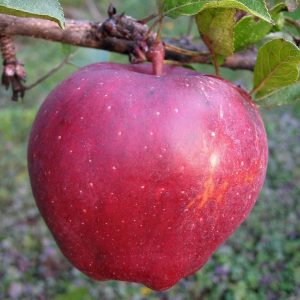
Fruit Color: Dark red; persistent through winter
Bearing Habit: Annual bearer; persistent fruit
Years to Bear: 1-3 years
Culinary Uses: Jelly, preserves, cider; fruit is tart when raw; high pectin content makes it ideal for jellies
Robinson is moderately susceptible to Apple Scab (Venturia inaequalis), the dominant Malus fungal disease in humid summers. Scab ascospores release during green-tip through petal fall with leaf wetness above 55°F. Organic management: remove and hot-compost fallen leaves each autumn, prune for canopy openness annually, and apply copper-based fungicide at green-tip if prior-year pressure was heavy. Fire Blight (Erwinia amylovora) rates moderate resistance — Robinson rarely suffers catastrophic losses, but prune shoot strikes 8 inches below visible discoloration and sterilize tools between cuts. Cedar-Apple Rust (Gymnosporangium juniperi-virginianae) and Powdery Mildew (Podosphaera leucotricha) both rate resistant; maintaining 300+ feet from Eastern Red Cedar further limits rust inoculum. Frogeye Leaf Spot (Botryosphaeria obtusa) rates moderate resistance; leaf and fruit sanitation handles routine pressure. All four monitored pest slots rate moderately susceptible. Hand-pick Japanese Beetles (Popillia japonica) into soapy water at dawn; avoid pheromone traps, which attract more beetles than they catch. Remove Eastern Tent Caterpillar (Malacosoma americanum) egg masses in late winter and silk nests before larvae disperse. Aphids (Aphis pomi/Aphis spiraecola) respond to strong water jets or OMRI-listed insecticidal soap. San Jose Scale (Quadraspidiotus perniciosus) is most vulnerable at delayed-dormant stage; a single horticultural oil application then breaks the cycle effectively.
Apple Scab: Moderately Susceptible
Fire Blight: Moderately Resistant
Cedar-Apple Rust: Resistant
Powdery Mildew: Resistant
Frogeye Leaf Spot: Moderately Resistant
Japanese Beetle: Moderately Susceptible
Eastern Tent Caterpillar: Moderately Susceptible
Aphids: Moderately Susceptible
San Jose Scale: Moderately Susceptible
- Scab sanitation first: Fall leaf removal reduces scab pressure more reliably than spray programs; use a hot compost pile to kill overwintering spores rather than shallow burial.
- Prune for airflow early: Fast early growth creates dense branching; thin crossing and interior branches in the first three dormant seasons to reduce the humid microclimate that favors scab and fire blight.
- Japanese beetle management: Hand-pick into soapy water at dawn, or apply kaolin clay as a physical deterrent during peak emergence (late June through August); avoid pheromone traps near the tree.
- Scale at dormancy: San Jose scale is most vulnerable when dormant; a well-timed horticultural oil at delayed-dormant stage breaks the cycle more effectively than summer sprays.
- Cedar distance: Despite good rust resistance, avoid planting within sight-line of Eastern red cedar or other junipers — high-inoculum years can defoliate even resistant cultivars.
We ship in late winter or early spring based on your USDA hardiness zone.
We strive to ship orders on the scheduled dates listed in the table below. However, please note that the actual shipping date may be subject to change due to factors like weather conditions and order volume.
The specific date for shipping your order will be determined according to your zipcode at the time of checkout.
Our plants are shipped bare root, packed in moist sawdust, and securely wrapped in plastic to prevent the roots from drying out. We use USPS Ground Advantage for shipping, ensuring that your plants typically arrive within 2-5 days after packaging.
In case you're unable to plant the trees immediately upon arrival, we recommend soaking them in water for a few hours and temporarily heeling them in. Ideally, they should be planted within three days of receipt for optimal health.
See our full shipping policy and map here
| Zone | Ship Date |
|---|---|
| 11 - 8b | March 1st, 2027 |
| 8a - 7b | March 8th, 2027 |
| 7a | March 15th, 2027 |
| 6b | March 22nd, 2027 |
| 6a | March 29th, 2027 |
| 5b - 5a | April 12th, 2027 |
| 4b - 4a | April 26th, 2027 |
| 3b - 1a | May 3rd, 2027 |
Our 365-Day Plant Guarantee: We ensure that our plants are delivered to you alive and healthy. If your plant does not survive its first year, you're eligible for store credit under these conditions:
- Your location falls within the appropriate USDA hardiness zone for the plant variety (refer to our hardiness zone map).
- You maintain the roots' moisture and plant within three days of delivery, following the instructions in our Planting Guide.
If you're concerned about your plant's health, please consult our guide, How to Tell if Your Tree is Dead or Dormant. Remember, our plants are shipped in a dormant state and may leaf out at different times based on their species. To check for plant vital
Related products

Siberian Crabapple
Checking fitRated 4.60 out of 5
Ein-Shemer Apple
Checking fitRated 5.00 out of 5
Cinnamon Spice Apple
Checking fit
Jonathan Apple
Checking fit


Reviews
There are no reviews yet.